
Story · First chess sessions in Lingavadi
When the Lights Went Out, the Chess Games Continued
How a small classroom in India changed the way I think about chess, opportunity, and what Chess4Girls could become.
Iniya MathivananJune 19, 20258 min read
Why I Started Chess4Girls
I started playing chess when I was around eight years old. At first, I loved it for a pretty simple reason: it made me think.
There was something satisfying about sitting across from someone, studying the same 64 squares, and trying to figure out what they were thinking. It didn't matter how old you were, where you came from, or who you were. On the board, your moves spoke for themselves.
But as I started playing in more tournaments, I noticed something.
There weren't many girls.
Sometimes I would look around a tournament hall and realize just how few girls were competing compared to boys. At first, I didn't think much of it. It was just how tournaments were. But as I got older, I started wondering why.
Why did so many girls stop playing? Why did chess seem like such a male-dominated activity? And why did it sometimes feel like girls had to prove they belonged in a space that should have been open to everyone?
I knew girls were just as capable of becoming strong chess players. I'd played against incredibly talented girls, and I knew how much dedication the game required, regardless of gender.
I wanted more girls to have the opportunity to experience chess the way I had.
So when I was 13, I started Chess4Girls.
I began working on a website, planning tournaments, exploring coaching opportunities, and thinking about ways to make chess more welcoming and accessible to girls. I wanted to create a community where girls could learn, compete, and feel comfortable making mistakes without worrying about whether they belonged.
At the time, I thought the biggest challenge was getting more girls interested in chess.
Then I went to India.
A Visit I Didn't Expect
During a trip to Tamil Nadu, I had the opportunity to visit Cedar India, an organization based in Madurai that works with underserved children.
Originally, I was just supposed to meet the founders, learn about their programs, and explore whether Chess4Girls could collaborate with them.
But after hearing about Chess4Girls and what I had been working on, they invited me to visit one of the villages they were beginning to support.
That village was Lingavadi, about an hour outside Madurai.
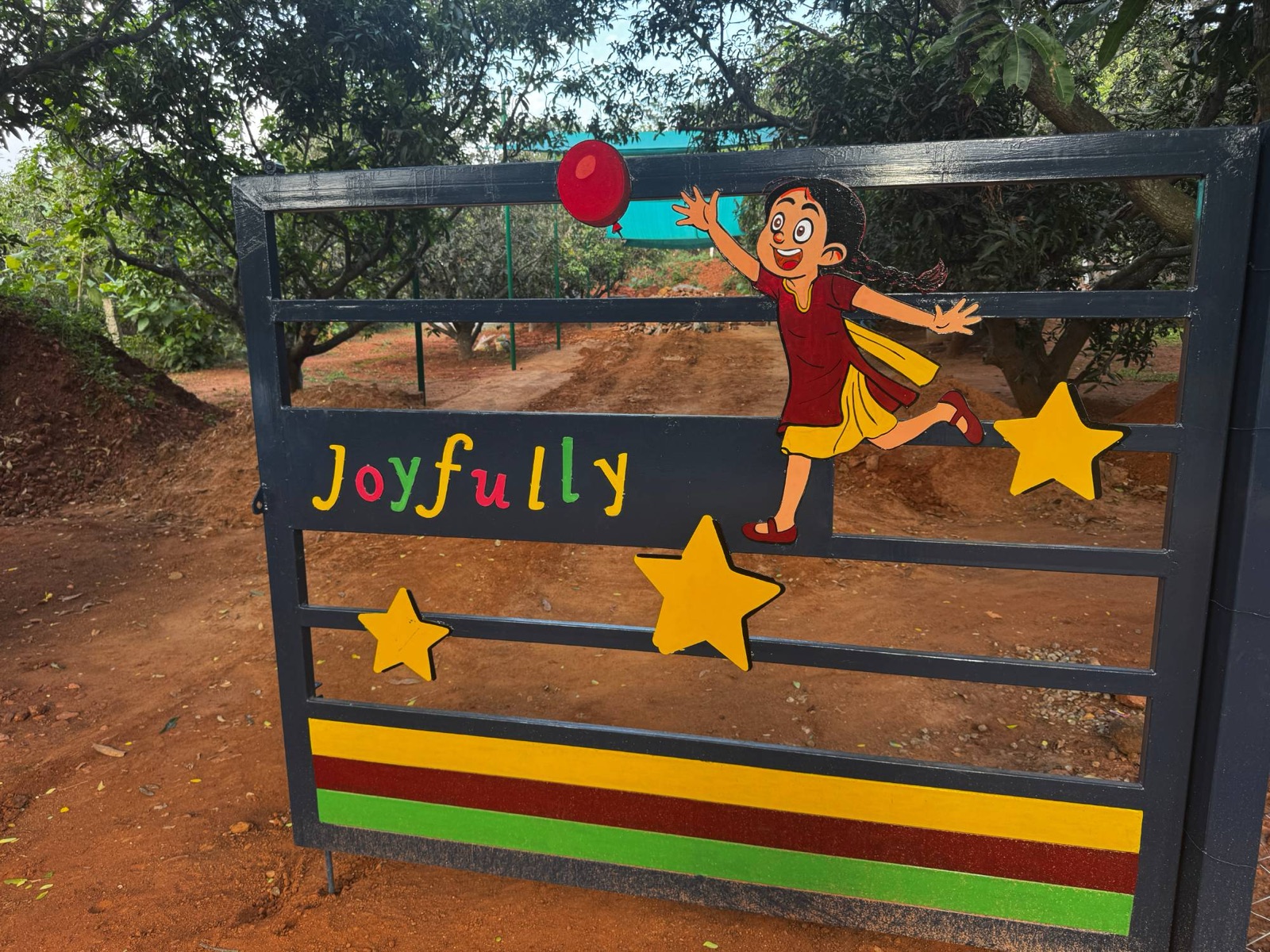
I remember the drive there. As we got farther from the city, the roads became quieter, and we passed beautiful green fields and open landscapes. It was very different from what I was used to growing up in San Diego.
When we arrived at the school, I realized just how different the experience would be.
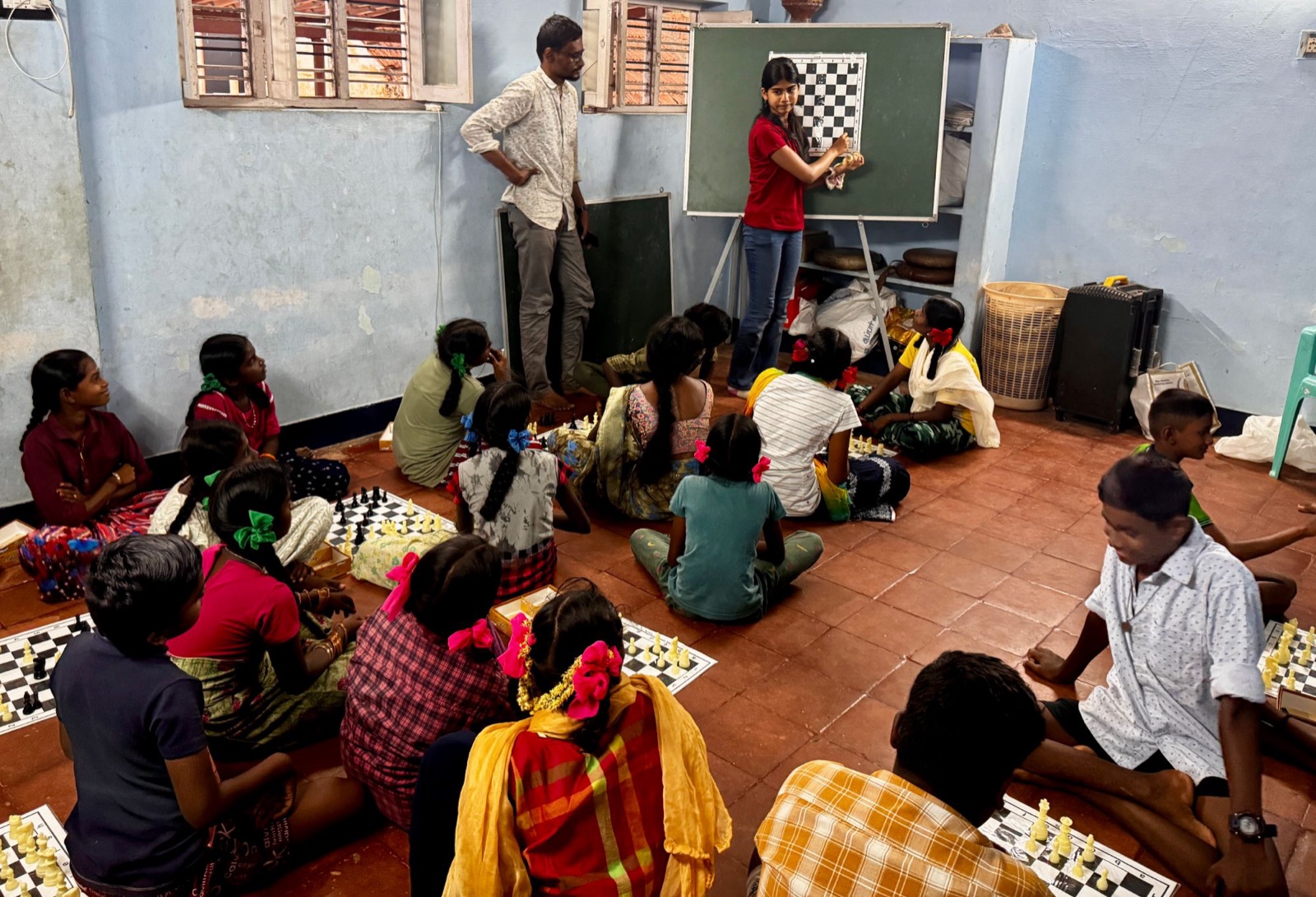
There was one small enclosed classroom. The walls were worn and damaged, and most of the other classes were held outside because there weren't enough proper classrooms.
This was where I would be teaching chess.
I had prepared to explain how the pieces moved and introduce the children to the game. But standing in that classroom, I suddenly realized that teaching chess here was going to be very different from teaching it back home.
And I was nervous.
Forty Kids, One Classroom, and My Very American Tamil
As the children started arriving, the classroom filled up almost immediately.
There were so many children interested in participating that the Cedar team had to redirect some of them to another educational camp nearby because there simply wasn't enough space.
Eventually, around 40 children gathered in the classroom.
And then I realized I had a problem.
Language.
I grew up in San Diego, and English is my first language. I speak Tamil at home with my parents, but speaking Tamil with my family is very different from standing in front of 40 children in a village in Tamil Nadu and trying to explain the rules of chess.
My Tamil also has a very obvious American accent.
I was worried that the children wouldn't understand me or that I wouldn't be able to explain things properly.
But once I started teaching, something changed.
The children were so curious about the chess pieces that I slowly stopped worrying about how I sounded.
For many of them, it was their first time even touching a chess piece.
They picked up the pieces, examined them, asked questions, and tried to understand how each one moved. Some of them were fascinated by the knights. Others were excited when they realized they could capture an opponent's piece.
I was trying to explain everything in my best Tamil, occasionally struggling to find the right words, and sometimes making everyone laugh with my pronunciation.
But nobody seemed to mind.
They were interested in learning, and that was what mattered.
Soon, they started playing their first games.
And just when everything was going well, the power went out.
The Moment I Still Think About
The classroom was already hot, with around 40 children crowded into a small space.
When the electricity went out, the fan stopped working, and the room became dark.
My immediate thought was that we would have to stop.
I was used to having electricity, proper lighting, and a comfortable environment when teaching or playing chess. Without those things, I assumed continuing would be too difficult.
But the children didn't react the way I expected.
They didn't get up or complain.
Instead, some people brought out candles. The adults turned on the flashlights on their phones. Small circles of light appeared around the classroom.
And the children just kept playing.
I remember looking around and seeing kids leaning over their chessboards, concentrating on their next moves, barely distracted by what had happened.
For them, the power outage wasn't a reason to stop. It was something they were used to dealing with.
I took out my own phone, switched on the flashlight, and continued helping them.
It seems like such a small moment now, but I think about it often.
I had walked into that classroom thinking about everything the children didn't have. But when the lights went out, they were the ones showing me how little they needed to keep learning.
They didn't have perfect classrooms, fancy chess sets, or reliable electricity.
But they had curiosity.
And they really wanted to learn.
More Than Just Chess
One of my favorite memories from that day actually happened after we finished playing.
Some of the girls gathered around me and started braiding my hair and tying ribbons into it.
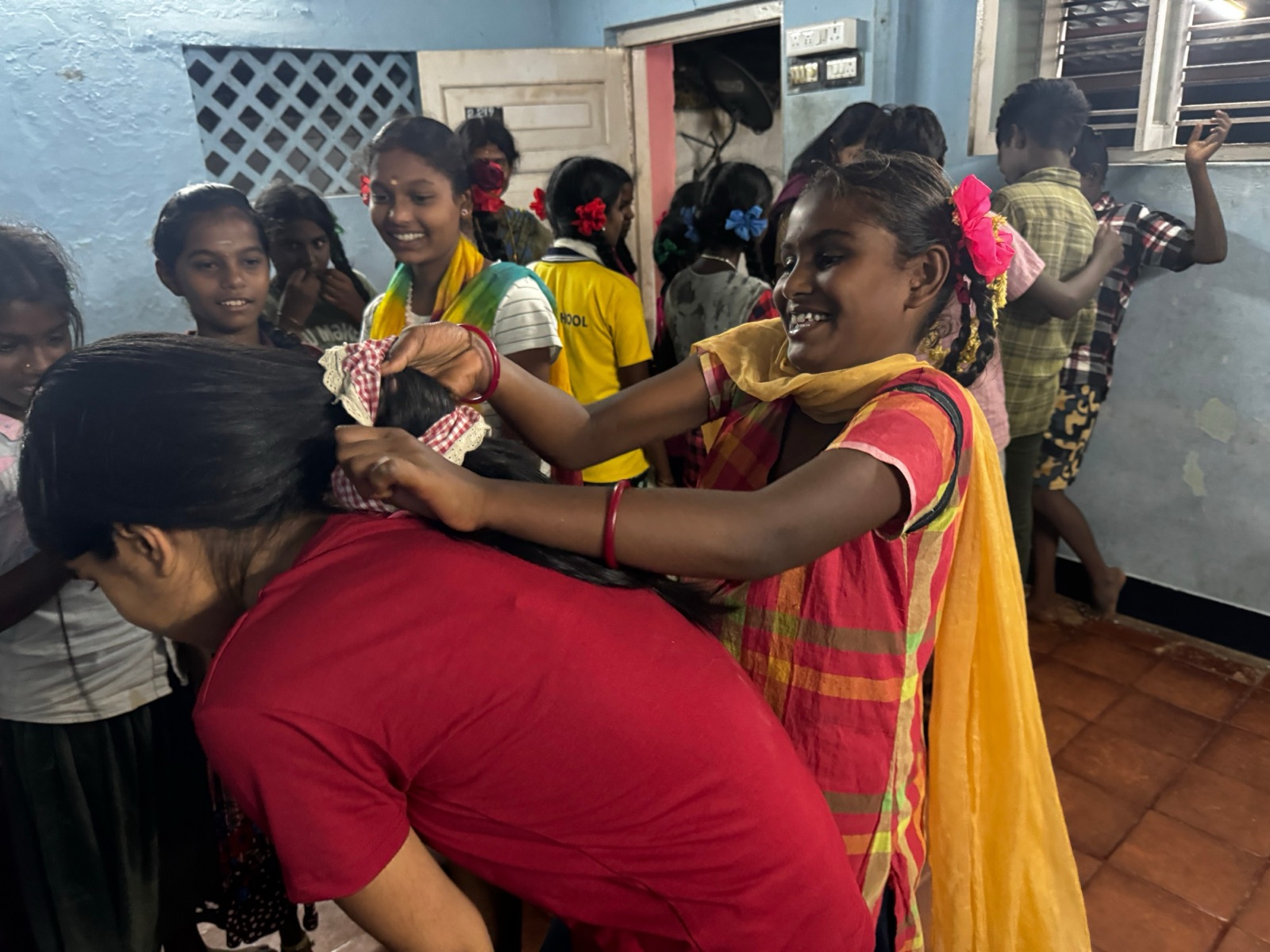
We talked, laughed, and exchanged phone numbers. A few of them wanted to stay connected through their parents' WhatsApp accounts so we could continue talking.
By then, the nervousness I had felt when I first entered the classroom was completely gone.
We were just a group of girls spending time together.
During our conversations, I also started learning more about their lives.
Many of their fathers worked far away from home, sometimes leaving for months at a time to earn money for their families. Their mothers and grandmothers took care of things at home while they were away.
It made me think about how different our everyday lives were.
Back in San Diego, I could attend chess tournaments, take lessons, practice online, and spend hours analyzing games on my computer.
For these girls, even having access to a chessboard wasn't something they could take for granted.
I had always thought of chess as a game that anyone could play.
Technically, that's true.
But I was beginning to realize that having the ability to do something and having the opportunity to do it are two very different things.
These girls were curious, enthusiastic, and eager to learn. They just hadn't been given the same opportunities I had.
And I kept wondering how many other children were in the same situation.
What I Brought Home
When I returned to San Diego, I kept thinking about that classroom.
Not just the broken walls or the electricity going out, but the kids themselves.
I remembered how excited they were to learn a new move, how seriously they concentrated during their games, and how quickly they adapted when the lights went out.
I also thought about my own reaction.
The moment the electricity stopped working, I assumed the session was over.
The children didn't.
That was probably one of the biggest lessons I took away from the experience.
I had grown up with so many resources that I sometimes forgot how much I depended on them. And here were children who had learned to work around challenges I rarely had to think about.
It made me question what really determines someone's ability to learn and succeed.
How much of it comes from talent?
How much comes from opportunity?
And how much potential goes unnoticed simply because someone never gets the chance to discover what they're capable of?
I don't think I have the answers to those questions yet.
But I want to keep exploring them.
Why Chess4Girls Means More to Me Now
When I started Chess4Girls, my goal was to address the gender gap in chess.
That is still a huge part of what I want to accomplish.
But my experience in Lingavadi made me realize that the problem is bigger than just getting more girls to participate in tournaments.
For some girls, the challenge is feeling confident enough to enter a tournament.
For others, it's finding a coach or someone who encourages them to keep playing.
And for some, it's something as basic as having access to a chessboard in the first place.
I started thinking about chess differently.
Chess isn't just about winning games or improving your rating. It teaches you to recognize patterns, think ahead, make decisions, and learn from mistakes.
Those are skills that extend far beyond the board.
This is also part of what has drawn me toward studying how people think and learn, especially the differences between human decision-making and artificial intelligence. I'm interested in how we recognize patterns, how we respond to unexpected situations, and how our experiences influence the choices we make.
Chess gives me a way to explore these questions.
But Lingavadi helped me understand why those questions matter outside of a research project or chess tournament.
I want Chess4Girls to continue creating opportunities for girls to learn and compete in chess, while also helping them develop the confidence and problem-solving skills that can open doors in other parts of their lives.
I know that a single chess workshop isn't going to solve the challenges these children face.
But I also know what I saw that day.
I saw children who were excited to learn something completely new. I saw girls who wanted to keep playing even when the electricity went out. And I saw how much enthusiasm there could be for an opportunity that I had always taken for granted.
I went to Lingavadi hoping to teach children how to play chess.
I came home thinking much more about what it takes to give someone the chance to learn.
And that's the part of Chess4Girls I want to keep building.
Because sometimes, the thing standing between a girl and what she's capable of isn't her ability. It's simply whether she gets the opportunity to try.